

IT Services Become Governance – Put Your Assets in Full Business Context
We have renamed IT Services (Service Mapping) to Governance. However, this update is not only about renaming; it expands the feature from 'IT service-only' modeling to supporting any business context – including applications, vendors, ownership, policies, and more. Let's go through what this means for you.
 Anton Berghult •
 From IT Services to Full Business Context
In the latest update of vScope, you will find that IT Services (also referred to as “Service Mapping”) have been replaced with Governance. This change reflects an important evolution in how vScope supports your organization. Previously, the feature allowed you to structure assets around IT services. That capability remains, but Governance now extends far beyond just IT service modeling. Now you can connect assets to any business-relevant context and build the structure that mirrors how your organization actually operates.
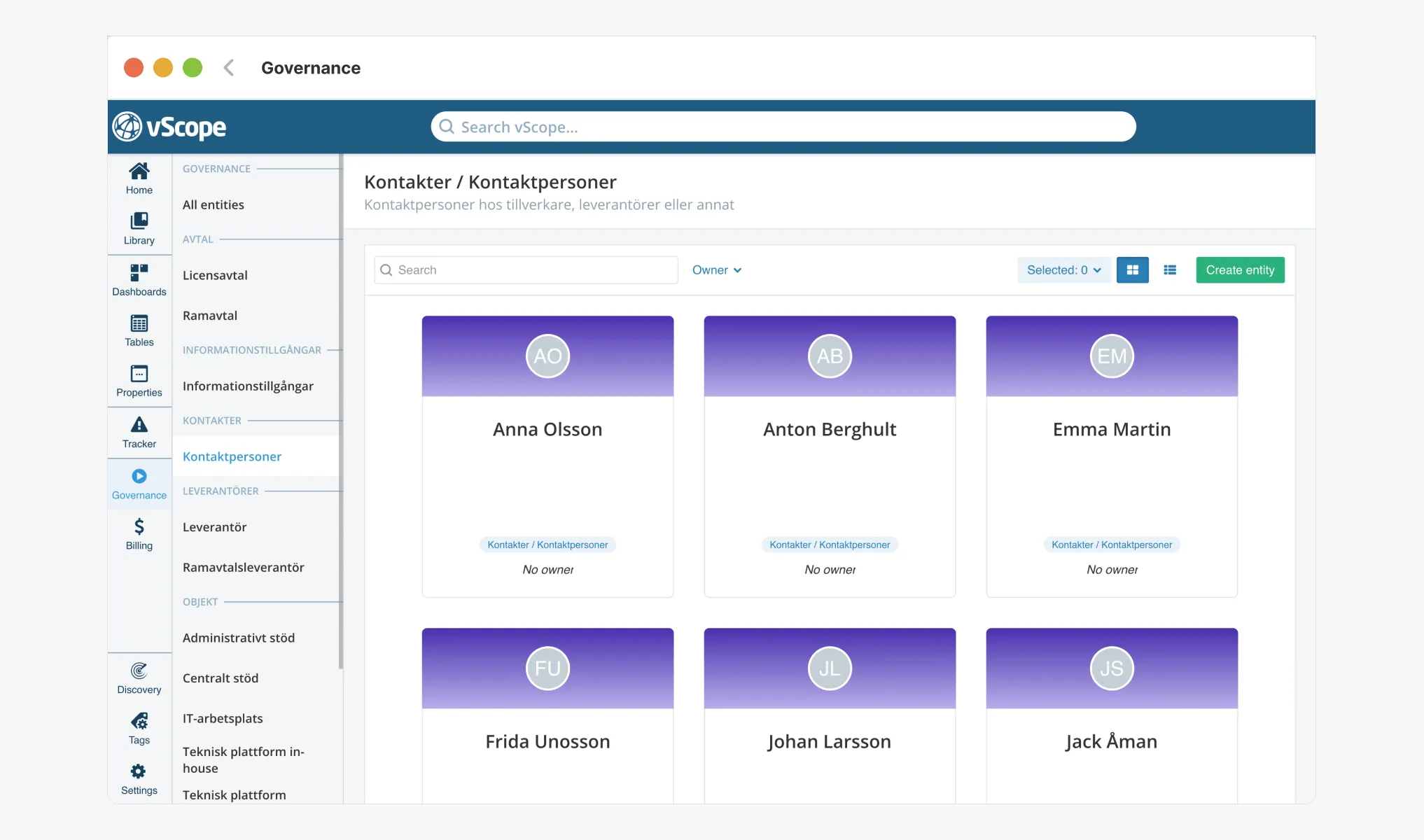
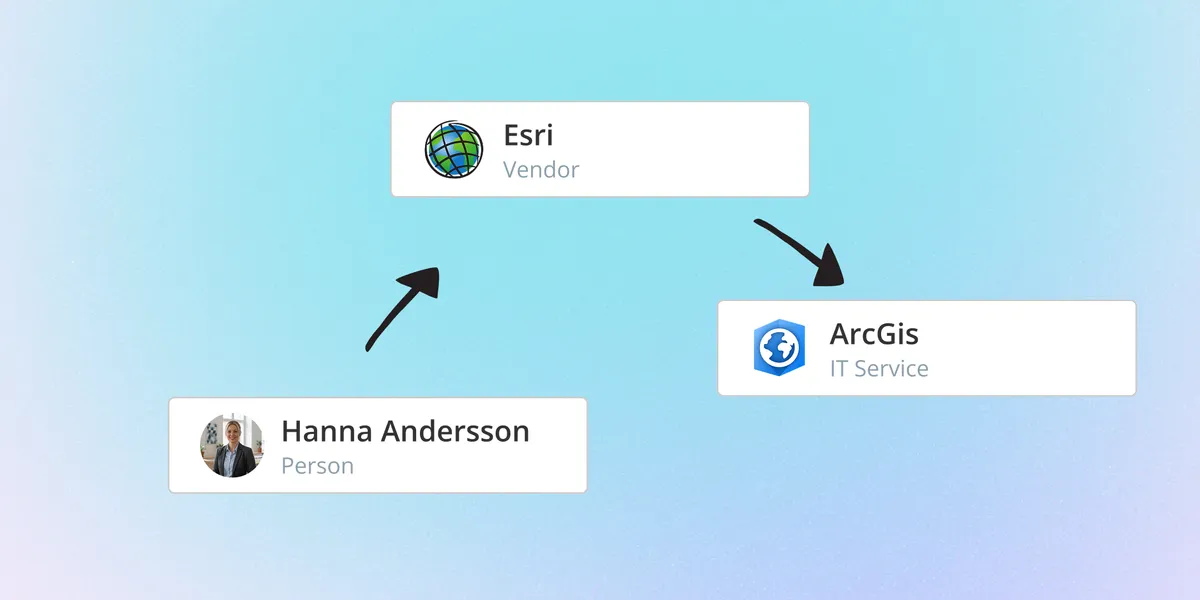
From Service View to Full Business Context
With vScope Governance, assets are not just technical objects in the asset repository. They become the building blocks of a structured business model where you can map relationships, ownership, and dependencies of business contexts, such as:
- IT Services
- Applications
- Vendors and suppliers
- Locations and organizational units
- Customers
- Policies and compliance frameworks
… or any custom context relevant to your governance model.
This flexibility allows you to move from a purely technical asset inventory to a documentation system that also reflects operational and strategic reality.
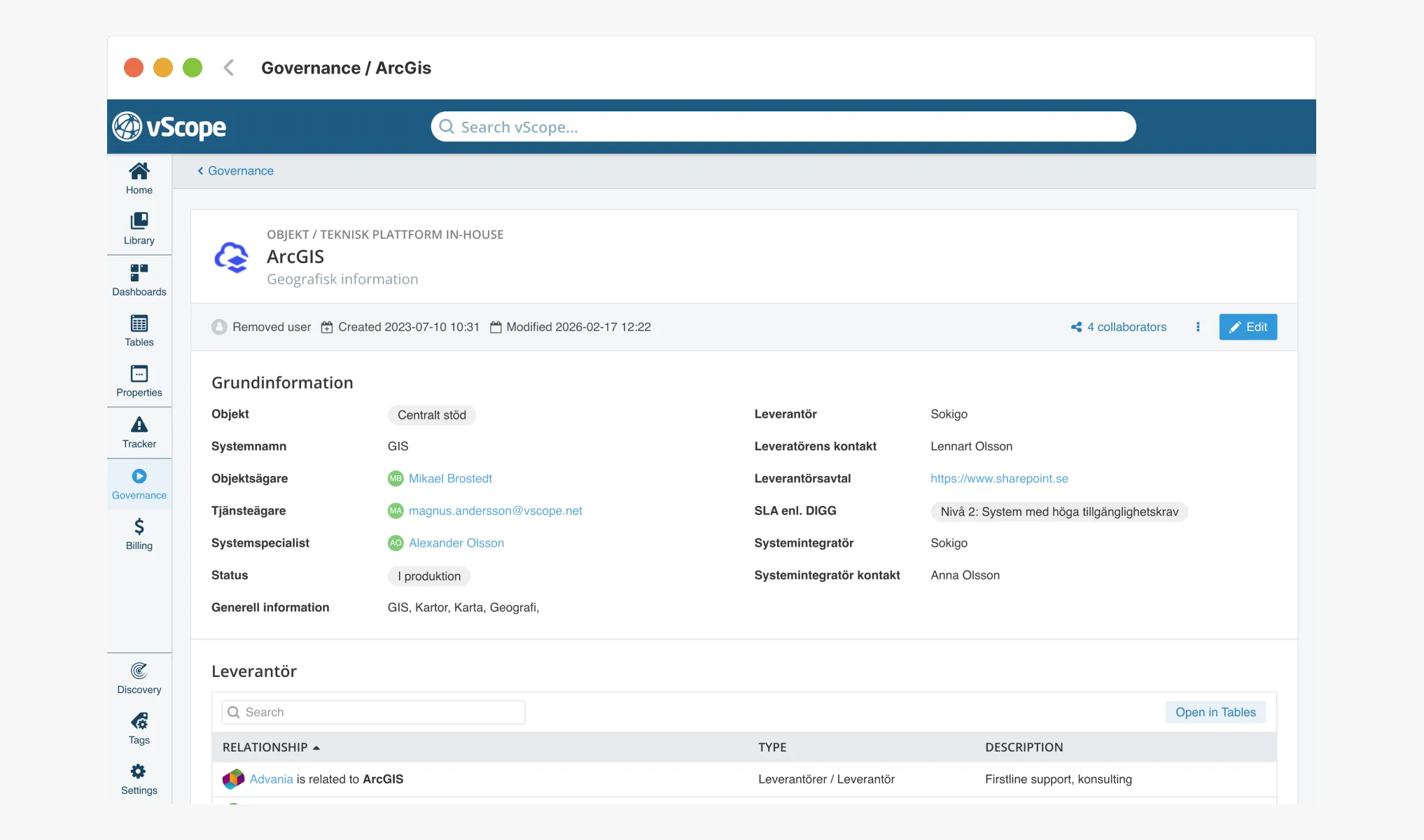
Why This Matters
Modern IT environments are interconnected and subject to increasing compliance and audit requirements. Governance helps you:
- Clarify ownership and accountability for many different roles in the organization.
- Understand how infrastructure supports applications and services.
- Link vendor contracts and IT services to the assets they cover.
- Tie policies and regulatory requirements directly to relevant systems.
- Create structured, audit-ready documentation.
Instead of maintaining context in spreadsheets or separate documentation systems, you define it directly where the asset data already lives.
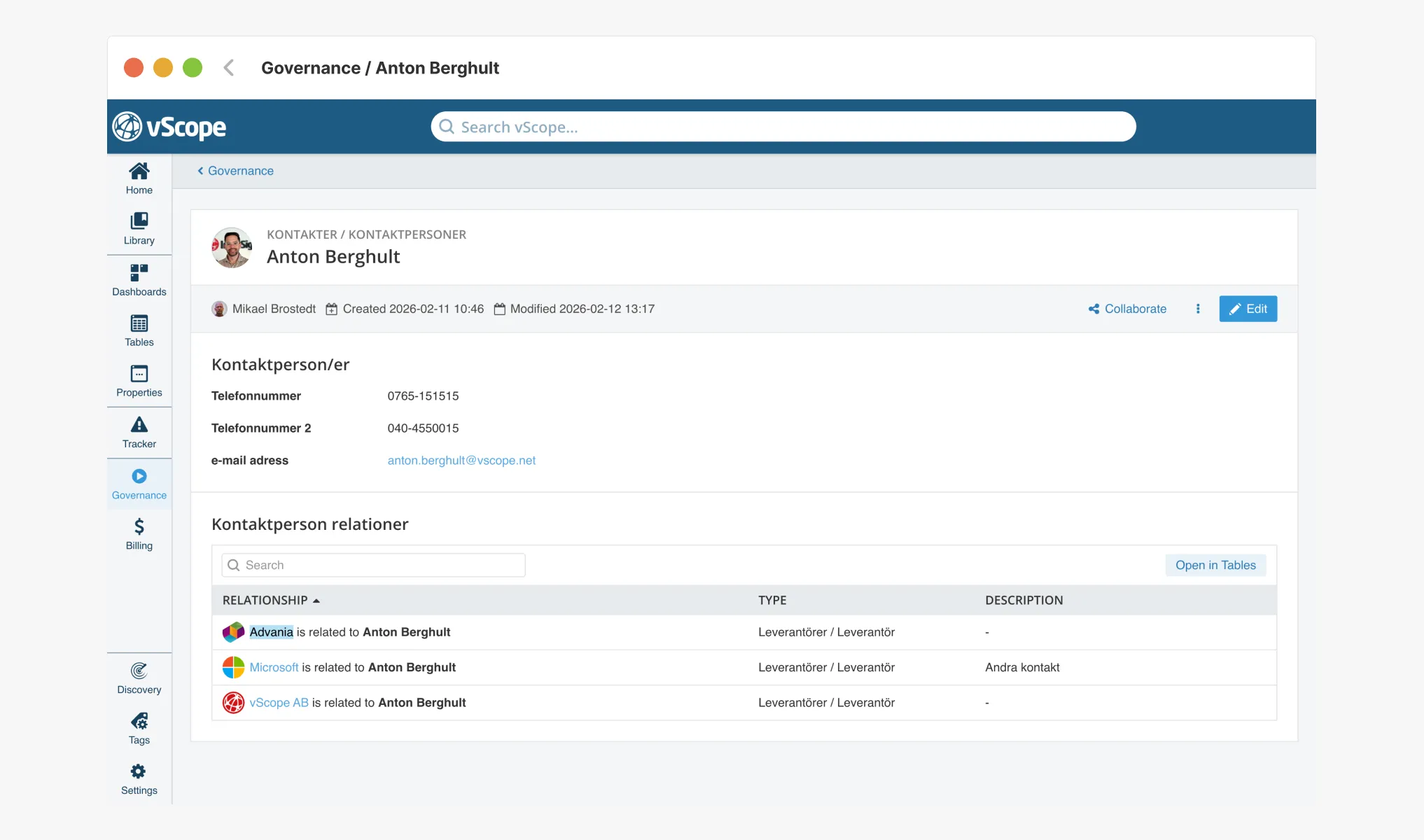
Same Data. Broader Perspective.
Your discovery and asset data remain unchanged with vScope Governance. What changes is how you can structure and use it. If you are already using IT Services, you now have expanded capabilities available under Governance. If not, this is a good opportunity to start structuring your asset repository around the business contexts that matter most to you and your organization.
If you have been using IT services (Service Mapping) before, IT Services have automatically been migrated to “Governance”. The biggest change is that the Layouts you’ve created are now called Types and are visible in the navigation bar. Under Governance > Settings > Types, admins can choose to hide the types you don’t want to use in your governance structure. In the following support article, you can read more about hiding entity types.
Get started
Check out vScope’s Support page to learn more about Governance. If you haven’t tried it yet, we would love to give you a demo and show how your organization would benefit from adding business contexts to your asset repository.
Learn More
Related blog posts
All posts
Tracker evolves: from case list to compliance overview
From a list of issues to a clear compliance overview. The latest Tracker update introduces a more structured way to monitor, prioritize, and improve your IT environment. Here's the latest update about vScope Tracker!
 Anton Berghult March 30, 2026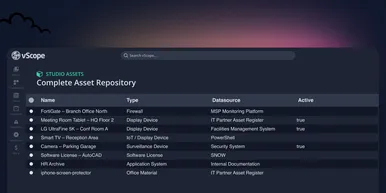
Introducing vScope Studio – Discovery Without Limits
vScope Studio lets you connect new data sources and document more asset types in your asset repository. A great add-on to your asset discovery if you want to take your asset repository to the next level.
Anton Berghult March 27, 2026 
Take Control of Adobe Licenses with Cost Reports in Minutes
Stop spending time on manual cost reporting. vScope now includes expanded support in its built-in price list templates for Adobe licenses, making it easier to create clear, reliable cost reports in both SEK and EUR.
 Axel Svegerud March 20, 2026
New datasource: Proxmox
vScope now discovers Proxmox VE for hosts, VMs, containers, networks, and capacity. This will help you bring full visibility into hosts, VMs, containers, capacity and other Proxmox assets.
Anton Berghult February 24, 2026 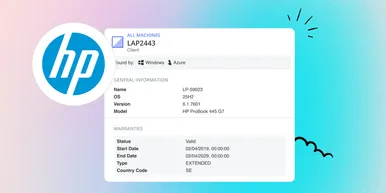
HP Warranty: Deeper lifecycle visibility
Fetch and sync warranty data from HP, directly to vScope for improved planning and control of your assets' life cycle status. In this post I will briefly go through the latest feature in vScope, and how this strengthen the value of your asset repository.
Anton Berghult February 23, 2026 
Standardize IT Billing Faster with Built-In Price List Templates
Reduce manual pricing work and get more accurate IT billing in place faster using reusable, best-practice price list templates. Here is the latest feature of vScope Billing
Anton Berghult January 26, 2026 
Introducing Network Port Mapping in vScope: Finally See What’s Connected – and Where
One of the most requested features is now here. With Network Port Mapping for SNMP, IT teams can instantly see how devices are connected across the network, no more remoting into switches, outdated documentation, or guesswork. This update helps you troubleshoot faster, improve documentation, and strengthen overall network security.
Anton Berghult November 26, 2025 
New in vScope: A More Personal Experience with Interest Profiles
We’re introducing Interest Profiles in vScope, a new way to make vScope more relevant and helpful for every user. Get a home screen and library experience tailored to your interests, responsibilities, and daily work.
Anton Berghult November 20, 2025 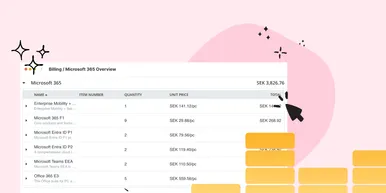
New Price List for Easier Control of Microsoft 365 Costs
With vScope’s new price list for Microsoft 365, it’s easier than ever to understand, monitor, and optimize your license costs. The price list is automatically applied to your asset inventory once vScope is connected to your Microsoft 365 environment.
Anton Berghult October 22, 2025